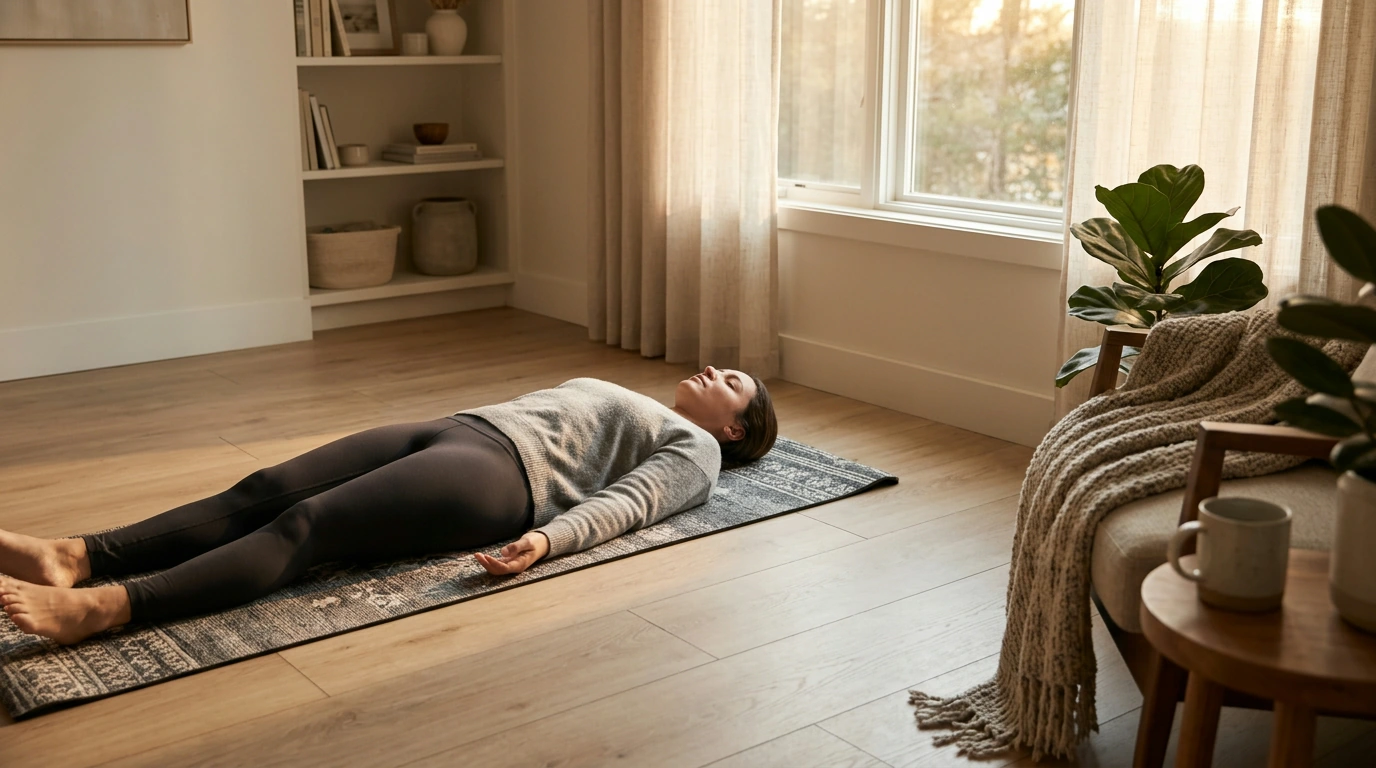
Body scan meditation is a simple way to reconnect with physical sensations, release built-up tension, and steady your attention. It works best when you keep the goal modest: notice what’s happening in your body, one region at a time, without trying to “fix” anything.
Choose a quiet spot where you can sit or lie down for 5–20 minutes. If you’re lying down and tend to get sleepy, try sitting with your back supported and feet on the floor. Let your hands rest naturally and soften your jaw.
Close your eyes (or lower your gaze) and take 3 slow breaths. Feel the air move in and out. On each exhale, let your shoulders drop a fraction.
Pick a direction—head to toe or toe to head—and move in a steady sequence. Spend 10–30 seconds per area. A common order is: toes, feet, ankles, calves, knees, thighs, hips, lower back, abdomen, chest, upper back, shoulders, arms, hands, neck, face, and scalp.
In each region, silently note what you feel: warmth, coolness, pressure, tingling, heaviness, lightness, tension, or even “nothing noticeable.” If you find tightness, allow it to be there and see if it naturally shifts as you breathe.
If a spot feels tense, imagine the inhale gently creating space and the exhale softening around that area. Keep it subtle—no straining, no forcing.
Distraction is normal. Each time you notice you’ve drifted, label it briefly (“thinking,” “planning”) and return to the last body area you remember.
At the end, sense your whole body at once for 10–20 seconds. Then open your eyes and reorient slowly. For more guided variations and routine ideas, visit this body scan meditation guide.
Five minutes is enough to get benefits, especially for daily consistency. If you have time, 10–20 minutes allows you to explore each area more slowly without rushing.













Leave a comment