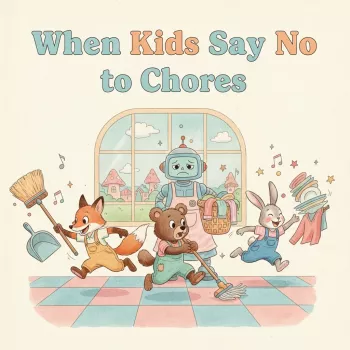
Chore refusal usually isn’t laziness—it’s often about power, unclear expectations, overwhelm, or skills that haven’t been taught yet. A steady approach that pairs empathy with firm boundaries can reduce conflict and build follow-through. The goal is a home where responsibilities are predictable, arguments are shorter, and kids learn that contribution is part of family life.
One helpful mindset shift: treat chores as a learnable skill set, not a character test. That keeps the focus on structure and coaching rather than escalating consequences.
Many conflicts disappear when the chore is small enough to start and clear enough to finish. Aim for “specific, visible, and checkable.”
| Chore | What “done” means | Quick check |
|---|---|---|
| Tidy toys | All toys in labeled bins; floor clear | Can a door open fully? |
| Table help | Plates to sink; crumbs wiped; napkins tossed | Hand over surface: no grit |
| Laundry start | Clothes in hamper; hamper in laundry area | Hamper empty in room |
| Pet care | Food/water refreshed; area tidy | Bowls filled; no spilled kibble |
If you want a ready-to-use structure for chore routines and calm follow-through, the digital guide When Kids Say No to Chores | Parenting Guide for What to Do When Child Refuses Chores can make it easier to stay consistent when you’re tired or juggling multiple kids.
Refusal often turns into a debate because adults talk too much. A short script reduces loopholes and keeps you regulated.
After you give the expectation, stop selling it. Silence is powerful—especially when your next step (a boundary) is predictable.
Authoritative parenting resources emphasize warm connection plus clear limits. For additional guidance on age-appropriate discipline and communication, see American Academy of Pediatrics – Positive Parenting Tips and the CDC – Positive Parenting Tips.
If routines are derailed by hectic mornings and decision fatigue, simplifying other parts of the day can indirectly improve cooperation. Some families like using planning tools for predictable choices—such as the Minimal Trends Toolkit for Outfit Planning: 3-in-1 Bundle of Guides, eBooks & Checklists—so energy can go to the non-negotiables like school prep and chores.
If you suspect bigger regulation or attention challenges are driving refusal, credible overviews from the American Psychological Association – Parenting and discipline resources can help you think through next steps.
Consistency is easier when adults are resourced, too. If you want a simple way to protect your own energy and reduce aches from carrying laundry baskets, cleaning, or repetitive tasks, consider the Mastering Mobility & Flexibility for Peak Performance guide as a practical self-care add-on.
Many families treat basic chores as a non-paid contribution and reserve allowance for “extra” jobs that go beyond the daily expected tasks. This reduces constant bargaining and keeps the baseline expectation consistent even when money isn’t involved.
Prioritize safety and regulation first, and pause the demand during peak distress. Once calm, return to the boundary with one small next step (like a 2-minute starter task) and a predictable, proportionate consequence.
Start with simple, supervised tasks (put toys in a bin, carry napkins) and gradually add multi-step responsibilities as skills grow. Teaching the steps, using visuals, and increasing independence slowly works better than expecting a big jump in maturity.












Leave a comment