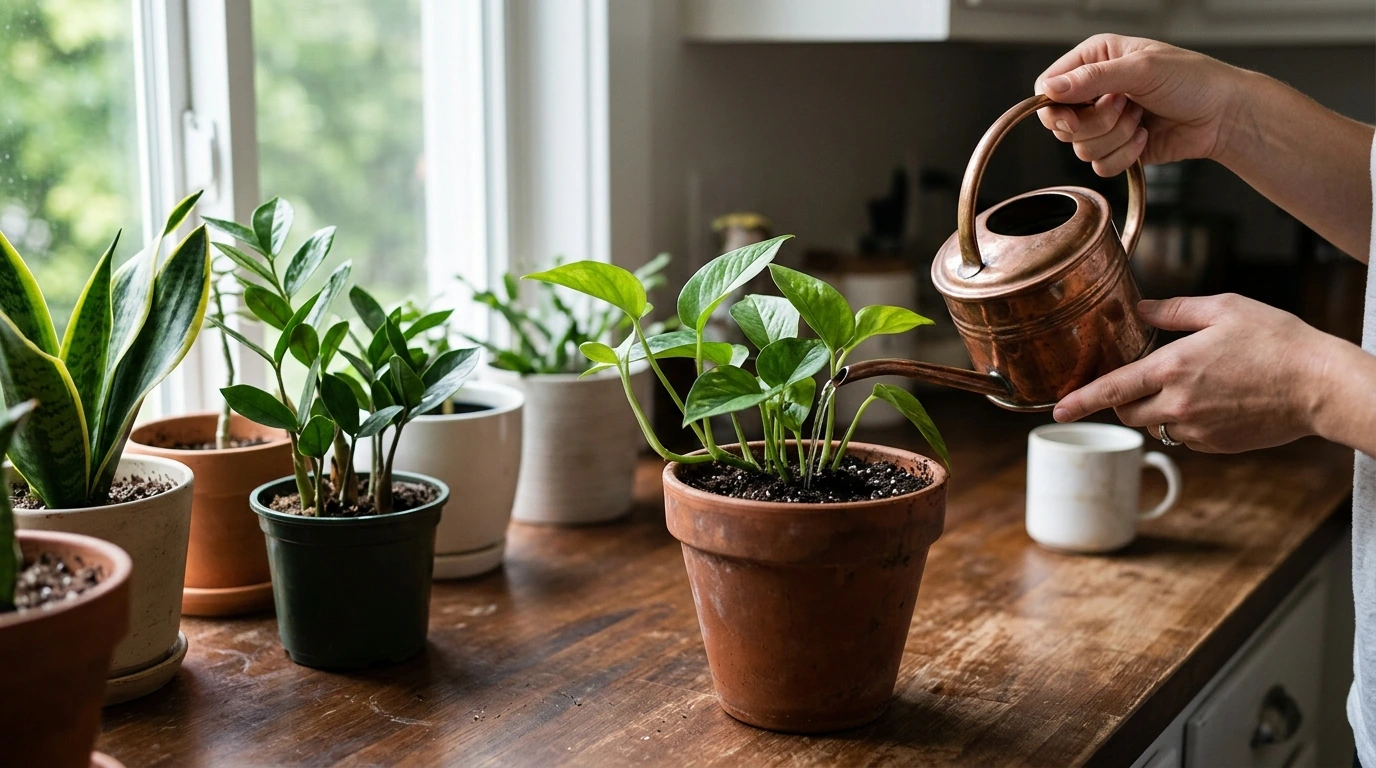
Most indoor plants do best when watered about once every 7–14 days, but the “right” frequency depends on how fast the potting mix dries out in your home. A practical rule is to water when the top 1–2 inches of soil feel dry for many common houseplants. For moisture-loving plants, you may water a bit sooner; for drought-tolerant plants, wait until the soil dries deeper.
Instead of sticking to a strict calendar, match watering to your plant, pot, and environment. Bright light, warm temperatures, and low humidity typically make soil dry faster. Low light, cool rooms, and higher humidity slow drying and can make overwatering more likely.
Typical tropical foliage (pothos, philodendron, monstera): often every 7–10 days, once the top layer dries.
Succulents and cacti: usually every 2–4+ weeks, after the mix dries almost completely.
Ferns and other consistently-moist plants: commonly every 4–7 days, keeping soil lightly damp but not soggy.
Use the finger test first: if the top inch (small pots) or top two inches (medium pots) are dry, it’s generally time. Light pots are another clue—dry soil weighs less. Leaves can also signal timing: drooping or slight limpness often means thirst, while yellowing with soft stems can indicate too much water.
Water thoroughly until excess drains from the bottom, then empty the saucer so roots aren’t left sitting in water. Pots with drainage holes and a well-aerated mix make correct watering far easier, especially indoors.
For a deeper breakdown of thresholds, plant-specific schedules, and troubleshooting, see the full guide here: indoor plant watering schedule tips and thresholds.
Misting can briefly raise surface humidity but it doesn’t replace watering the roots. Use misting only for plants that benefit from higher humidity, and still water the potting mix as needed.













Leave a comment