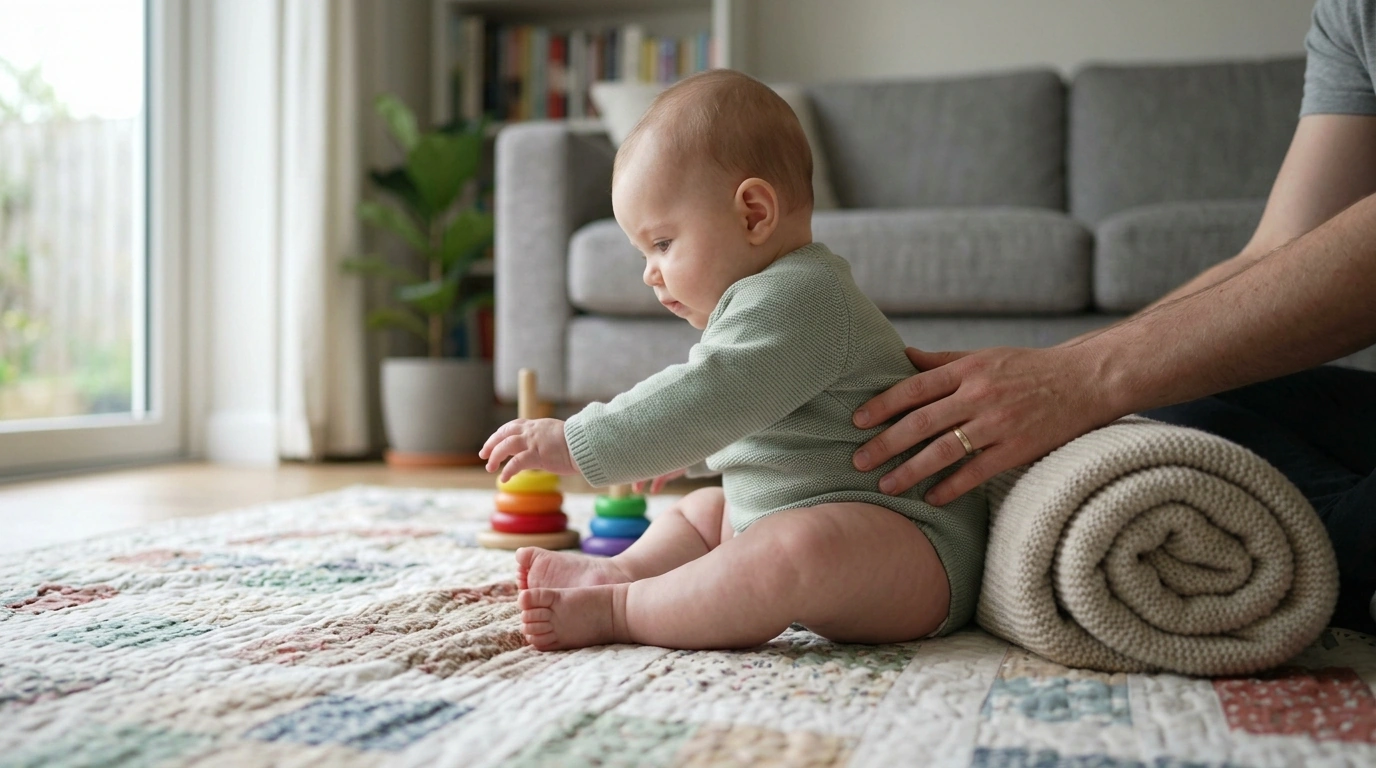
Usually, no. Most 3-month-old babies don’t have the trunk strength and balance needed to sit upright without support, even if they can briefly hold their head steadier than they could as a newborn. At this age, it’s more typical for babies to need hands-on support at the torso, a reclined position, or a caregiver’s lap to stay comfortable and stable.
At around 3 months, many babies can lift their head during tummy time and may hold it up for short stretches when carried upright. But “sitting” is usually wobbly: the back rounds, the head may bob, and the baby can tip sideways or forward quickly. That’s normal development—not a sign that something is wrong.
Gentle, supported practice is fine as long as your baby’s airway stays clear and their body is well supported. Try short moments of upright time on your lap or with your hands around their ribcage/torso. If your baby slumps, struggles to keep their head aligned, or seems uncomfortable, end the attempt and try again another day.
Tummy time is one of the best ways to build the neck, shoulder, and core strength that eventually helps independent sitting. You can also hold your baby upright against your chest, do supervised play on the floor, and offer age-appropriate time reaching for toys while supported. Avoid propping a baby into an unsupported sitting position before they’re ready, since it can lead to flopping and frustration.
Many babies sit independently closer to the middle of the first year, often after they can sit with support more steadily and use their hands to catch themselves. For a fuller timeline and safe ways to practice, see this guide: when babies sit up without support.
Look for steadier head control, stronger pushing up during tummy time, and the ability to sit with minimal support while staying upright without collapsing forward. Many babies also start using their hands to prop themselves and regain balance.













Leave a comment