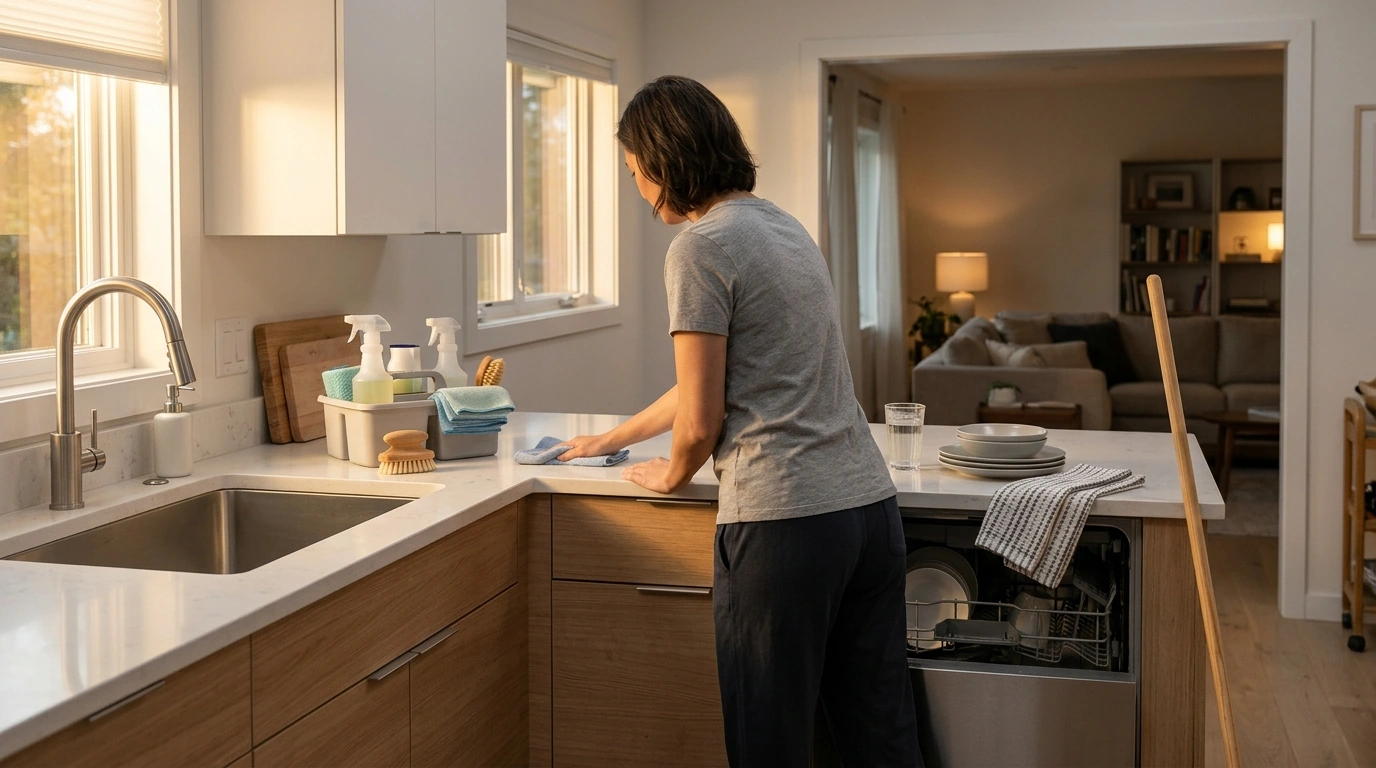
A home can feel consistently tidy without marathon cleaning sessions. The difference is a set of short, repeatable “resets,” a simple room-by-room checklist, and a few rules that stop small messes from turning into a full weekend project. Below is a practical system you can run on autopilot: what to do daily, weekly, and monthly—plus a checklist-style structure you can reuse again and again.
When time is limited, the goal isn’t perfection—it’s visible impact. Focus on the few areas that make your home look and feel clean fast: floors, counters, sinks, toilets, and the clutter hotspots where items pile up.
If you ever feel stuck, aim for one win: clear one surface. A counter, a coffee table, or a bathroom vanity acts like a “clean signal” that motivates the rest.
The fastest routines depend on one thing: not having to hunt for supplies. Create a small cleaning caddy per floor (or one portable caddy) and keep it stocked with multipurpose basics: all-purpose cleaner, microfiber cloths, a scrub brush, toilet brush, a glass cleaner, a disinfecting option, vacuum/broom, and trash bags. For safer product choices and labels, the EPA Safer Choice program is a helpful reference point.
Next, map your home into zones—kitchen, bathrooms, bedrooms, living areas, entryway, laundry—and define a “minimum viable clean” for each zone. That’s the smallest set of actions that makes the space look refreshed even on chaotic weeks.
| Task | Time | Result |
|---|---|---|
| Stock one caddy with core supplies | 5 min | No hunting for products |
| Place a hamper and small trash bin where clutter forms | 3 min | Less floor mess and pileups |
| Put microfiber cloths where wiping happens (kitchen/bath) | 2 min | Quick wipes become automatic |
| Create a donation bag/box in a closet | 2 min | Clutter exits without a big declutter day |
| Write zone “minimum viable clean” steps | 3 min | Clear defaults for busy days |
Daily cleaning shouldn’t feel like “cleaning.” It’s closer to resetting the space to neutral so tomorrow starts easier than today.
If you only do one daily task, choose the kitchen reset. It removes the most visual noise and prevents odors and pests.
| Day | Focus | Tasks |
|---|---|---|
| Monday | Laundry + surfaces | Start/finish one load; quick dust or wipe main surfaces |
| Tuesday | Kitchen | Wipe appliances; clean sink; mop kitchen floor (if needed) |
| Wednesday | Bathrooms | Toilet + sink + mirrors; swap towels |
| Thursday | Bedrooms | Change sheets; clear nightstands; vacuum high-traffic spots |
| Friday | Floors | Vacuum/sweep main areas; spot-mop |
| Weekend | Reset + optional deep task | 10-minute whole-home reset; choose one monthly task if time |
For disinfecting guidance in high-touch areas or during illness, follow the basics from the CDC’s cleaning and disinfecting recommendations—especially around doorknobs, faucets, and shared surfaces.
A structured checklist reduces decision fatigue and makes short cleaning sessions feel “done” instead of endless. If you prefer a ready-to-use format with daily resets, a weekly rotation, and flexible monthly tasks, Clean Less, Live More: The Ultimate Time-Saving Cleaning Guide and Checklist is designed for quick check-offs and repeatable routines.
And if clutter is driven by “nothing to wear” overflow or bedroom pileups, a streamlined wardrobe plan can indirectly make cleaning easier. Minimal Trends Toolkit for Outfit Planning: 3-in-1 Bundle of Guides, eBooks & Checklists helps reduce decision mess, which often reduces physical mess.
For most households, 10–20 minutes total per day is enough when it’s focused on the kitchen reset and a quick clutter pickup. Use a timer so you stop on time and stay consistent without overcleaning.
Restart with the minimum viable clean for each zone (kitchen, bathrooms, living areas, bedrooms) and call it recovered. Then resume your normal weekly rotation—avoid trying to do everything in one exhausting day.
Start with high-visibility and high-hygiene tasks: dishes/counters, the sink, the toilet, trash, and floors in high-traffic areas. Use a basket or bin to contain clutter quickly so you can clean surfaces without getting stuck sorting items.












Leave a comment