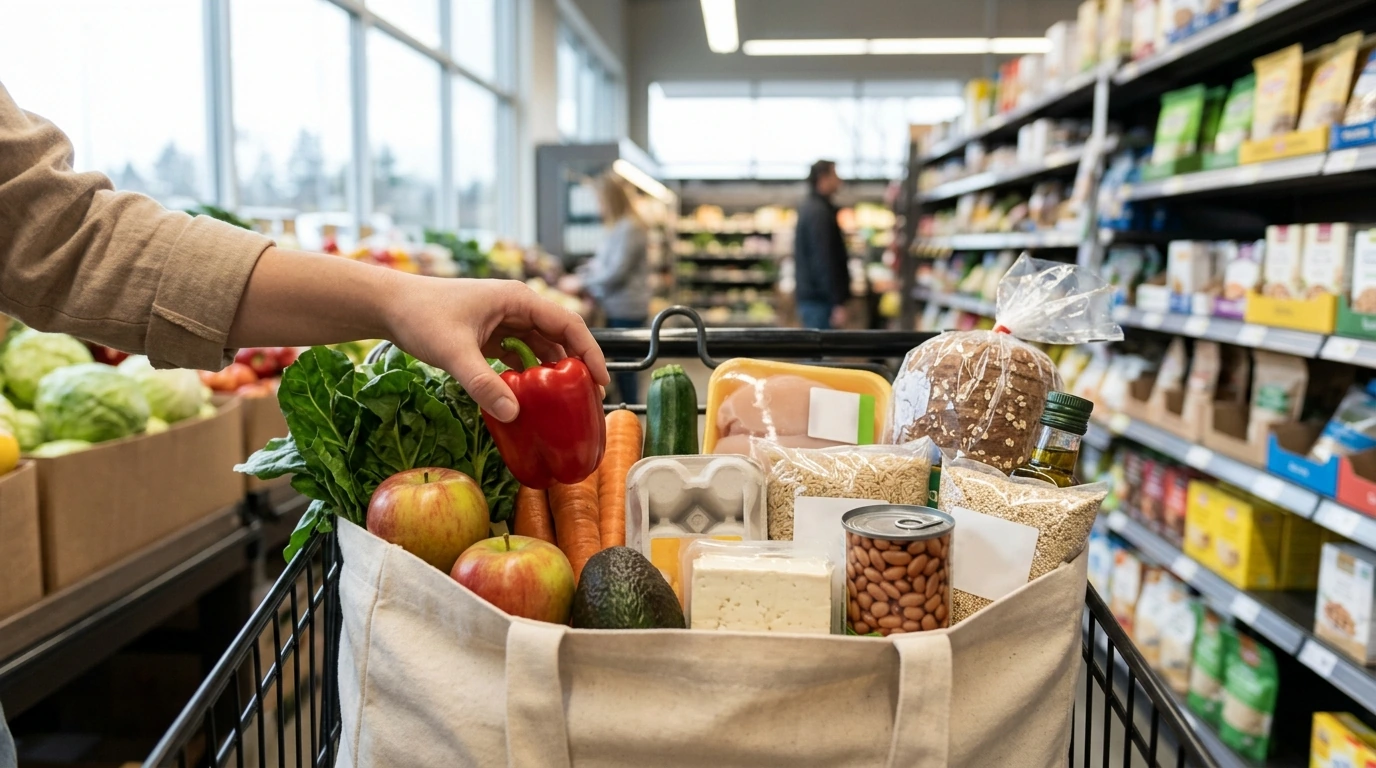
The 5 4 3 2 1 rule for grocery shopping is a simple way to build a balanced cart quickly: pick 5 fruits and vegetables, 4 protein items, 3 starches, 2 sauces or spreads, and 1 “fun” item. It’s popular because it reduces decision fatigue, keeps meals flexible, and helps prevent overbuying random extras.
Choose a mix you’ll actually use—like salad greens, onions, berries, bell peppers, and a frozen veggie. Mixing fresh and frozen helps reduce waste while keeping weeknight options open.
Pick proteins that cover different meals: chicken, eggs, canned beans, and Greek yogurt, for example. Including at least one shelf-stable option (like lentils or tuna) makes last-minute dinners easier.
Starches become the base of fast meals. Think rice, tortillas, and potatoes—or swap in pasta, quinoa, oats, or bread depending on what you cook most.
These add flavor without requiring extra planning. Options like salsa and pesto, hummus and marinara, or peanut butter and soy sauce can turn basic ingredients into different meals.
This is a small treat that keeps the plan realistic—chips, chocolate, sparkling drinks, or a bakery item. Because it’s limited to one choice, it’s easier to stay on budget.
If the rule sounds good but shopping still feels scattered, a structured list helps. Use this aisle-ready grocery list checklist to map items to your store layout and reduce backtracking.
For 5-4-3-2-1 Grocery Rule: Build a Balanced Cart Fast, the best answer depends on fit, material, care instructions, and how the product will be used day to day.
Start with 2–3 simple meals you can repeat, then list the core ingredients for each. Fill the gaps with versatile staples (like eggs, rice, and frozen vegetables) so leftovers and quick substitutions are easy.












Leave a comment