Healthy Toddler Snacks Checklist for Busy Days
Snack time can feel constant when a toddler is growing fast and routines are packed. A simple plan makes it easier to offer balanced options, reduce last-minute scrambling, and keep snacks consistent across parents, grandparents, sitters, and daycare. Use the checklist approach below to stock a few reliable choices, rotate for variety, and build quick combinations from foods already on hand.
What makes a toddler snack “healthy” and practical
A “healthy” toddler snack isn’t about perfection—it’s about steady energy, age-appropriate textures, and options you can actually repeat on a busy weekday.
- Aim for a mix of energy + staying power: pair a carbohydrate (fruit, whole grain) with protein and/or healthy fat (yogurt, nut/seed butter, cheese, beans, avocado) when possible.
- Keep portions toddler-sized: offer small servings and allow seconds; large portions can overwhelm and increase waste.
- Prioritize low added sugar and lower sodium options: check labels on crackers, granola bars, yogurts, and deli items.
- Choose textures that match chewing skills: avoid round, hard, sticky, or small foods that increase choking risk unless prepared safely (for example, grapes quartered lengthwise).
- Make it repeatable: build a short list of “default snacks” that can be assembled in under 2 minutes.
For trusted baseline guidance on toddler nutrition, see the CDC’s Infant and Toddler Nutrition and USDA MyPlate for Toddlers.
The easy snack planning rhythm (5 minutes today, easier all week)
A simple rhythm keeps the fridge and pantry “snack-ready” without turning Sunday into an all-day prep session.
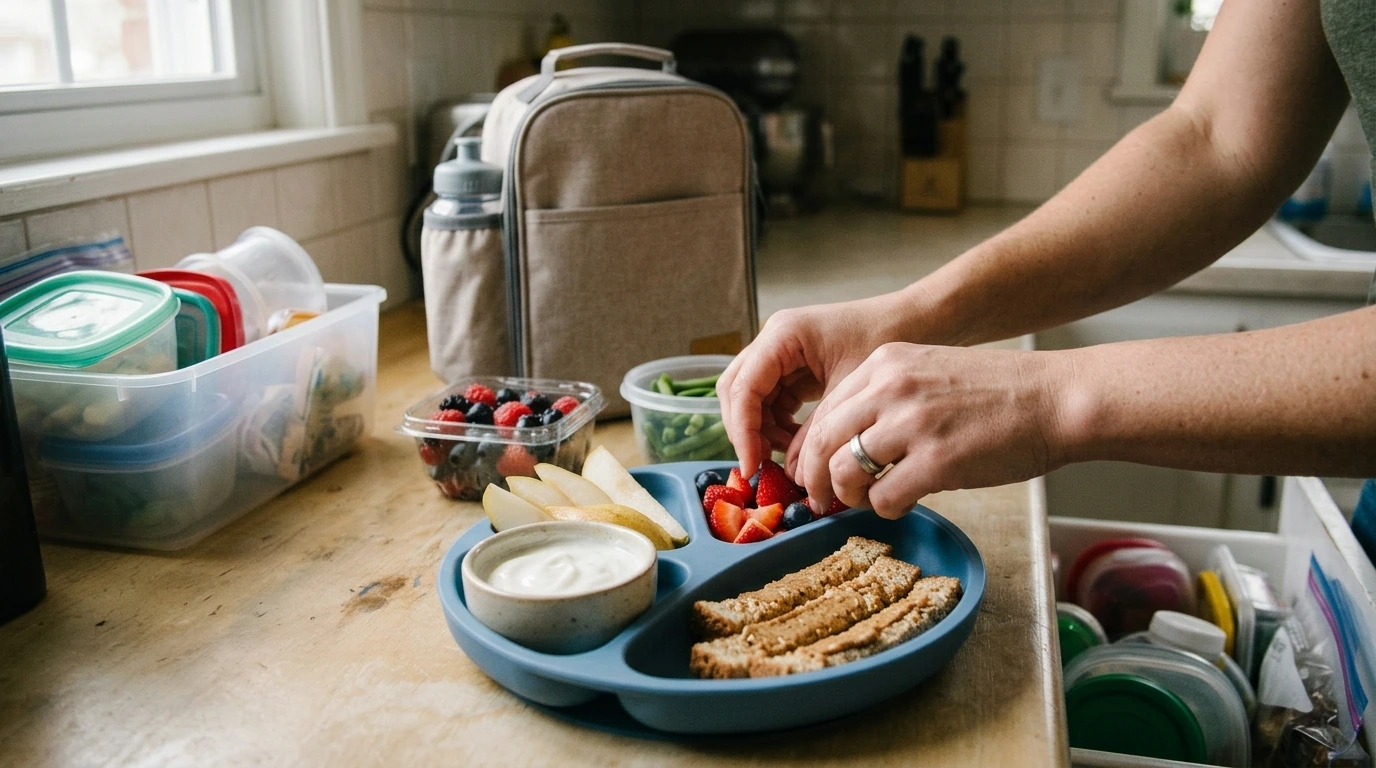
- Pick 3 “no-prep” snacks for the pantry/fridge (banana + peanut butter; cheese + fruit; yogurt + berries).
- Pick 3 “prep once” snacks (hard-boiled eggs; roasted sweet potato sticks; mini muffins with oats and fruit).
- Set one restock day: check fruit, dairy, and toddler-friendly proteins; add 5–7 items to the shopping list.
- Batch-wash and portion: rinse berries, slice cucumbers, and portion crackers/pretzels into small containers.
- Create a visible snack zone: one bin each for “anytime” snacks and “limited” snacks (treats, higher-sugar options).
Quick snack planning checklist
| Step |
What to do |
Examples |
Time |
| Choose defaults |
Select 6 reliable snacks |
yogurt + fruit; hummus + pita; avocado toast strips |
2 min |
| Prep basics |
Wash/slice/portion |
berries; cucumber sticks; apple slices with lemon water |
10–15 min |
| Protein ready |
Keep 1–2 proteins prepped |
hard-boiled eggs; shredded chicken; beans |
0–20 min |
| Pack & label |
Set up grab-and-go portions |
snack cups; small containers; daycare bags |
5–10 min |
| Restock cue |
Choose one day to restock |
Friday night or Sunday afternoon |
3 min |
Mix-and-match snack formula (build dozens of options fast)
When decision fatigue hits, a simple formula keeps snacks balanced without overthinking.
- Pick 1 from each category: Produce + Protein/Fat + Crunch/Grain (optional).
- Produce ideas: banana, berries, soft pear slices, steamed carrots, cucumber sticks, unsweetened applesauce.
- Protein/fat ideas: Greek yogurt, cottage cheese, cheese cubes, nut/seed butter (thin spread), hummus, mashed beans, avocado.
- Crunch/grain ideas: whole-grain toast strips, oat mini muffins, whole-grain crackers, pita triangles, age-appropriate rice cakes.
- Time-saver: keep a “default pairing” list on the fridge so any caregiver can assemble the same combinations.
If allergens are a concern, keep one or two nut-free “default pairings” (for example: hummus + pita, yogurt + fruit, or beans + toast strips) so packing for daycare stays simple.
Grab-and-go snack ideas by situation
Different moments need different snacks—some must survive a commute, some need to be low-mess, and some need to be ultra-familiar.
- Car seat / stroller: soft fruit; low added sugar yogurt pouch; mini sandwich on whole-grain bread; cheese stick (if tolerated).
- Daycare / preschool: bento-style boxes with 2–3 small components; include a familiar item plus one rotating option.
- Errands and appointments: shelf-stable packs like unsweetened applesauce cups, whole-grain crackers, and single-serve nut-free spreads when needed.
- Sick days or picky phases: smooth textures and familiar flavors—banana, toast strips, yogurt, soups in a cup, oatmeal.
- Hot weather: hydrating options—seedless watermelon sticks, cucumber, yogurt, smoothies with no added sugar.
Food safety and choking-risk reminders (quick but important)
For detailed choking-prevention guidance, reference HealthyChildren.org (American Academy of Pediatrics) – Choking Prevention.
Printable checklist and planning guide for busy caregivers
Healthy Toddler Snacks Checklist planning guide is designed for quick printing and easy coordination across caregivers.
If a busy household needs a broader “systems” approach (appointments, routines, packing lists), a second organizational resource can help keep the week running smoothly: Minimal Trends Toolkit for Outfit Planning: 3-in-1 Bundle of Guides, eBooks & Checklists.
FAQ
How many snacks should a toddler have each day?
Many toddlers do well with 1–3 snacks per day depending on age, meal timing, and appetite. Keep a predictable routine, offer water between eating times, and follow hunger cues; check with your pediatrician if growth or intake is a concern.
What are good low-mess snacks for daycare or the car?
Go for contained, soft, and easy-to-portion options like banana, cheese, crackers, mini sandwiches, yogurt with a spoon, or unsweetened applesauce cups. Packing in small containers and pre-portioning at home helps prevent spills and over-serving.
What foods should be avoided because of choking risk?
Common choking hazards include whole grapes, hot dog rounds, popcorn, whole nuts, hard candies, and thick globs of nut butter. Make foods safer by quartering grapes lengthwise, slicing hot dogs lengthwise and into small pieces, cooking vegetables until soft, and spreading nut butter thinly.
Recommended for you











Leave a comment