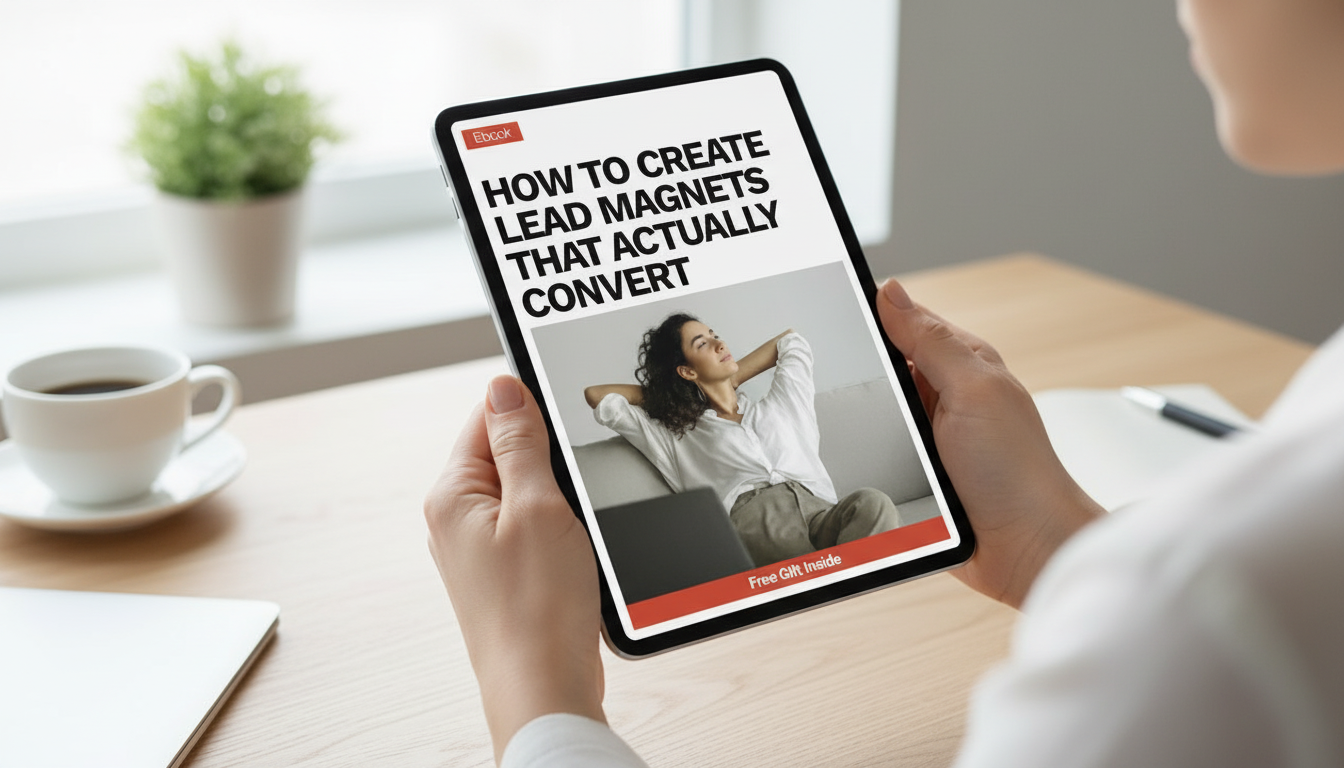
A lead magnet converts when it solves a specific, urgent problem for a specific person and removes friction from the moment of interest to the moment of opt-in. The most reliable wins come from tightening the promise, choosing a format people can finish fast, and measuring what happens after the signup—not just the signup itself.
A “successful” lead magnet doesn’t just collect emails—it attracts qualified subscribers who are likely to take the next step. Start by defining the primary goal as quality: the right people joining your list, then engaging.
High conversion usually comes from one sharp match: one audience segment + one “pain moment” + one immediate outcome.
Format is strategy. Match what someone needs right now: quick decision support, implementation help, confidence, or clarity. Keep the scope tight—one topic, one outcome, one finish line—and include a “completion trigger” that nudges the next action (reply, book, browse, start a challenge, download a tool).
| Format | Best for | Example promise | Notes |
|---|---|---|---|
| Checklist | Fast wins and error prevention | “The 10-point launch checklist to avoid the most common setup mistakes” | High completion rates; pair with a short welcome email |
| Template | Done-for-you execution | “Copy-and-paste email welcome sequence (5 emails)” | Strong conversion; requires clear instructions |
| Swipe file | Inspiration and speed | “15 subject lines that consistently boost opens” | Works best with a specific niche/context |
| Short ebook (20–40 pages) | Structured learning with a clear path | “A step-by-step system to build and test lead magnets” | Add summaries, examples, and implementation prompts |
| Calculator/worksheet | Decision-making and personalization | “Find the best offer angle in 5 minutes” | Higher perceived value; can be simple in a spreadsheet |
| Email course (5–7 days) | Habit building and nurturing | “A 7-day sprint to set up an opt-in and welcome flow” | Increases engagement; keep lessons short |
Strong lead magnets feel “obviously useful” within seconds. Lead with the outcome and make the promise easy to visualize.
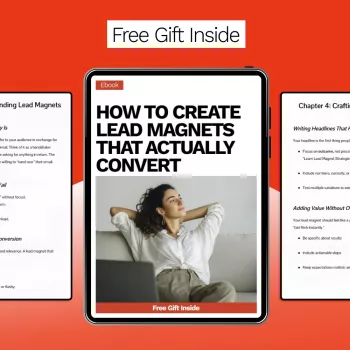
For a ready-to-follow system, How to Create Lead Magnets That Actually Convert (ebook guide) is built to move from idea to opt-in to testing with practical prompts.
Even a great offer underperforms when the page is cluttered or delivery feels uncertain.
For welcome-flow guidance and sequencing ideas, Mailchimp’s overview of welcome email best practices is a solid reference.
Need inspiration for niche-specific offers? HubSpot’s roundup of lead magnet ideas and examples can spark fast iterations.
As you edit, keep copy scannable—people skim first. Nielsen Norman Group’s guidance on writing for web readability explains why concise structure wins.
The best format depends on urgency and perceived effort. Templates and checklists often convert well for quick wins, while short ebooks and email courses work better when subscribers need a guided path and accountability.
It should be only as long as needed to deliver the promised outcome. A common range is 1–3 pages for checklists, 5–10 pages for templates/worksheets, and 20–40 pages for an ebook—completion matters more than length.
Double opt-in can reduce signup volume but improve list quality and deliverability, especially with colder traffic sources. Test both approaches based on your compliance needs, audience, and where subscribers are coming from.










Leave a comment