Life With a Dog Moves Fast—Your Routine Should Keep Up
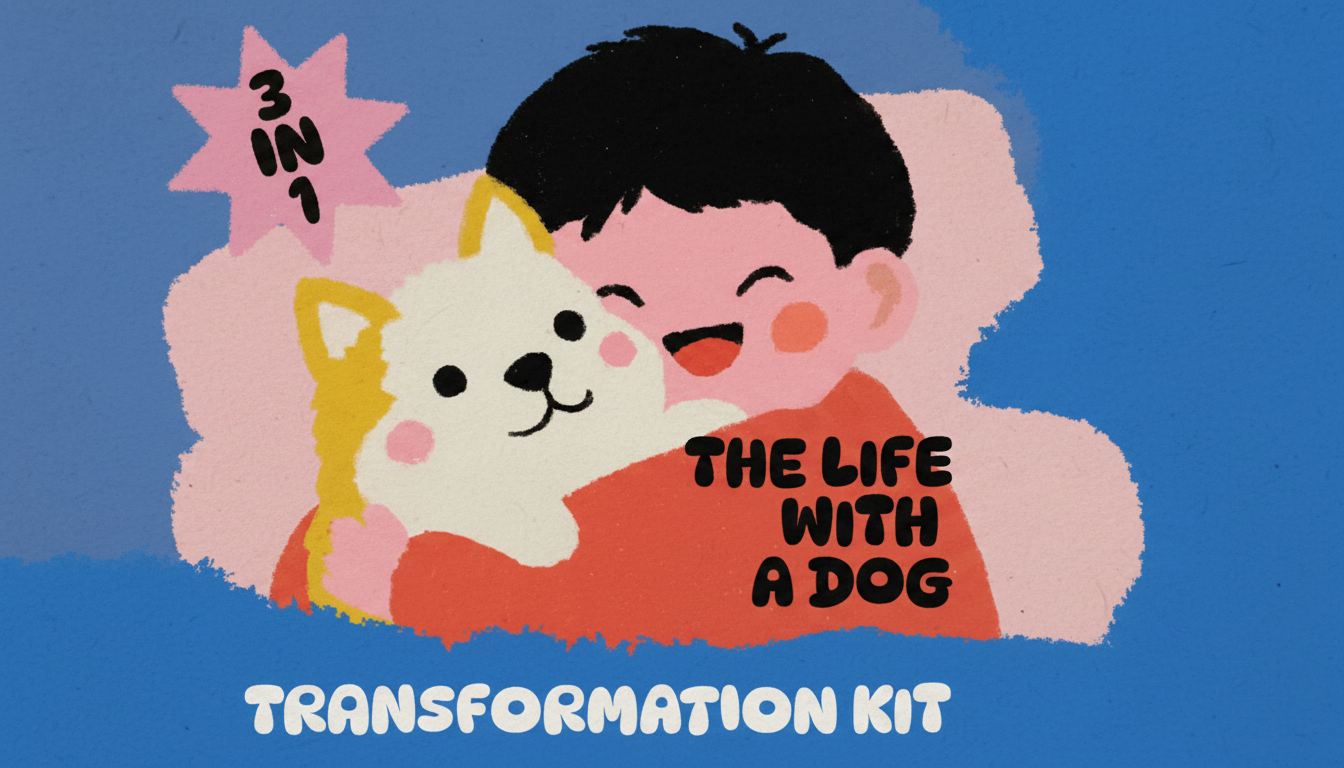
Life with a dog changes fast: a bouncy puppy phase, teenage testing, and an adult rhythm that can be calm—or chaotic—depending on habits built early. The The Life with a Dog Transformation Kit: Puppy Playfulness, Adult Calm & More – 3-in-1 Bundle is built around one simple idea: the best “well-behaved dog” outcomes usually come from repeatable daily patterns, not one-off tips.
This 3-in-1 bundle is designed to support daily routines that encourage playful engagement when it’s helpful and steadier behavior when it matters most—using practical materials that fit real schedules, real households, and real attention spans.
What This 3-in-1 Bundle Is Designed to Support
- Structured play that reduces random zoomies by giving energy a clear outlet.
- Calming routines that build predictability for adult dogs and easily overstimulated puppies.
- Better day-to-day communication through consistent cues, rewards, and timing.
- A simple framework for preventing common friction points: jumping, mouthing, barking, pulling, and restlessness.
- Household-friendly habits that make walks, visitors, and quiet time easier.
For training philosophy and humane handling guidance, it helps to align with evidence-based best practices such as the American Veterinary Society of Animal Behavior (AVSAB) position statements and foundational puppy resources from the American Kennel Club.
Who It Fits Best (and When to Use It)
- New puppy owners who want a clear rhythm for play, rest, and learning.
- Adult dog owners who want calmer indoor behavior without removing enrichment.
- Multi-person households that need consistency across handlers.
- People who prefer step-by-step routines over scattered tips.
- Ideal moments: mornings before work, post-walk decompression, pre-guest calm-down, and evening wind-down.
Quick match guide: phase, priority, and routine focus
| Dog stage |
Common challenge |
Routine focus |
What to track weekly |
| Puppy (8–20 weeks) |
Nipping and nonstop movement |
Short play bursts + enforced rest |
Number of successful calm settles |
| Adolescent (5–18 months) |
Selective listening and impulse issues |
Impulse games + consistency on walks |
Leash tension time and jumping incidents |
| Adult |
Restlessness indoors |
Enrichment + predictable calm cues |
Minutes of relaxed downtime |
| Any age |
Overstimulation with visitors |
Pre-visitor routine + stationing |
How quickly the dog settles |
Core Building Blocks: Playfulness With Purpose, Calm With Clarity
- Play is treated as training fuel: short, repeatable games that reinforce listening and self-control.
- Calm is taught as a skill: rewarding relaxed body language, not just the absence of chaos.
- Clear start/stop signals reduce frustration and teach the dog when interaction is available.
- A predictable cycle (activity → recovery → calm) helps avoid overtired behavior that looks like “too much energy.”
- Timing beats length: small changes in when you play, pause, and reward often matter more than longer sessions.
That structure is especially useful for puppies and adolescents, where over-arousal can snowball quickly. For puppy socialization and training foundations, the RSPCA’s guidance on training and socialisation complements a routine-first approach.
A Practical Daily Rhythm (Sample Schedule You Can Adjust)
- Morning: brief potty/walk + 5–10 minutes of structured play, then a calm settle routine.
- Midday: enrichment (food puzzle/snuffle) paired with a quiet period to reinforce downtime.
- Afternoon: short training micro-session (1–3 minutes per cue) embedded into normal life (doorway, leash, food prep).
- Evening: low-arousal decompression (chew, sniffing, gentle handling), then consistent bedtime cues.
- If behavior spikes: check basics first—sleep, physical activity, mental enrichment, and consistency between household members.
The goal isn’t to micromanage every hour; it’s to create dependable “bookends” to the day so your dog learns what comes next. Dogs settle faster when the pattern is familiar and the reinforcement is predictable.
Common Problem Spots—and How a Routine-Based Approach Helps
- Jumping on people: replace with a practiced alternative (sit, station, touch) and reward before the jump happens.
- Mouthing/nipping: redirect to approved items, reduce overstimulation, and reinforce calm breaks.
- Pulling on leash: teach attention and reward loose-leash moments; avoid making every walk a battle.
- Barking/reactivity moments: increase distance, reward calm observation, and focus on recovery routines after triggers.
- “Won’t settle” indoors: teach a default place behavior, reinforce tiny increments of relaxation, and build duration gradually.
What’s Included—and How to Use the Bundle Without Feeling Overwhelmed
Bundle Overview: The Life with a Dog Transformation Kit
If you’re ready to build a calmer day without draining the fun out of having a dog, start with The Life with a Dog Transformation Kit: Puppy Playfulness, Adult Calm & More – 3-in-1 Bundle and commit to one repeatable routine for the next seven days.
More In-Stock Digital Toolkits You May Also Like
FAQ
Is this bundle better for puppies or adult dogs?
It can support both. Puppies tend to benefit most from structure, short play cycles, and planned rest, while adult dogs often improve with predictable calm cues and enrichment that prevents indoor restlessness. Adjust the duration and difficulty to match your dog’s age and current impulse control.
How long does it take to notice calmer behavior?
Small improvements often show up within 1–2 weeks when daily routines and rewards are consistent. Bigger habit changes commonly take several weeks, especially if the dog has practiced the old pattern for a long time. Results vary with sleep, exercise, trigger exposure, and reinforcement timing.
What if multiple people handle the dog during the week?
Consistency becomes the main “multiplier.” Use shared cues, the same reward rules, and a simple written routine (even a short checklist) so handoffs don’t create mixed messages. Brief notes like “what we’re practicing” and “what to ignore” can prevent accidental backtracking.
Recommended for you












Leave a comment