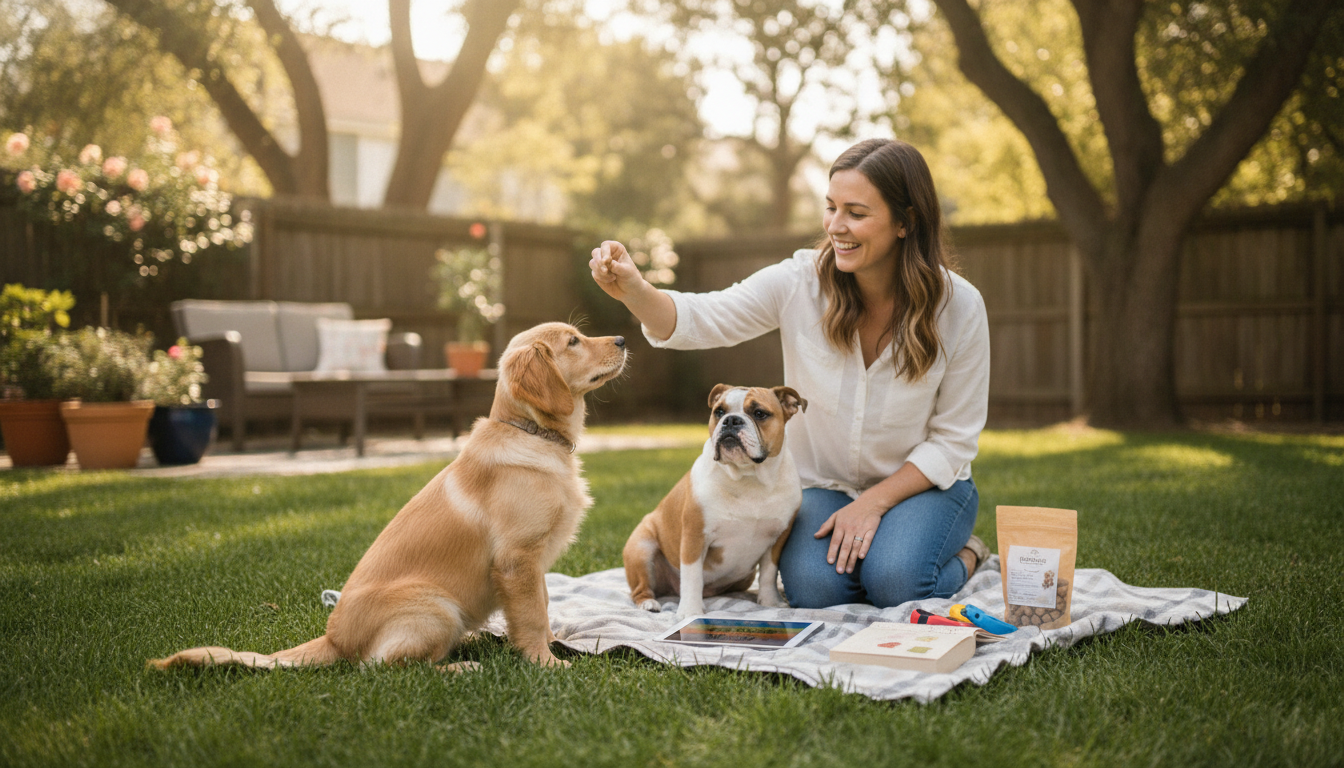
Sit is one of the easiest cues to teach—and one of the most useful. A reliable sit builds focus, impulse control, and polite manners without pushing or pulling your dog into position. With short sessions, clear rewards, and consistent timing, most puppies and adult dogs can learn a dependable sit at home in just a few days, then strengthen it over the following weeks.
When taught with reward-based methods, “Sit” becomes more than a trick—it becomes a default polite behavior you can use throughout the day.
For reward-based guidance backed by behavior professionals, the AVSAB’s humane training position statement and the RSPCA’s reward-training guidance are solid references.
Begin with your dog standing. Hold a treat right at nose level, then slowly lift it up and slightly back toward the forehead. As your dog’s head follows, the hips usually lower into a sit.
The moment the rear touches the floor, mark (“Yes” or click) and immediately reward. The timing matters more than the treat itself—marking clearly tells your dog what earned the reward.
After several successful repetitions, say “Sit” once, then do the hand motion. Over time, your dog will connect the word with the behavior.
Switch to the same hand motion with an empty hand, then mark and deliver the treat from the other hand or from your pocket. This keeps “Sit” from meaning “Sit only when food is visible.”
Quit while your dog is still eager. Frequent tiny wins beat long, frustrating sessions.
| Day | Goal | Reps | Notes |
|---|---|---|---|
| 1–2 | Capture the motion with a lure | 10–20 total/day | Train in a quiet room; reward every sit. |
| 3–4 | Add cue and begin empty-hand signal | 10–30 total/day | Say the cue once; if missed, reset and try again. |
| 5–7 | Reduce obvious luring, add small pauses | 20–40 total/day | Reward best sits; keep success high. |
If you prefer a printable, step-by-step format that helps keep cue timing consistent (especially across multiple family members), see Teaching Your Dog the Sit Command | Dog Training Guide Download, Puppy Obedience eBook, Instant Digital PDF for Beginners & Pet Owners.
For another simple, humane walkthrough, the American Kennel Club’s sit guide aligns well with reward-based steps.
Training is easier when your own movements are smooth and consistent during short sessions. If you’re doing lots of reps (especially with a large dog), mobility work can help you stay comfortable during daily practice; Mastering Mobility & Flexibility for Peak Performance – Athlete & Everyday Movement eBook is a practical option for building a simple routine.
For a structured, beginner-friendly follow-along, you can use Teaching Your Dog the Sit Command | Dog Training Guide Download, Puppy Obedience eBook, Instant Digital PDF for Beginners & Pet Owners to keep sessions consistent day to day.
Many dogs learn the basic motion in a few short sessions, but reliability usually takes days to weeks of practice. Progress depends on reward value, consistent timing, distractions, and whether your dog already understands marker training.
Sit is often a great early cue because it’s simple and supports manners, but keep sessions short and upbeat. Pair sit with name recognition, recall foundations, and calm leash routines for well-rounded early training.
The visible treat has accidentally become part of the cue. Use a marker, keep treats hidden, reward after the mark, and gradually reduce predictable treat delivery while still reinforcing your best responses.












Leave a comment