Stress is unavoidable; suffering from it isn’t. Resilience is a set of skills that helps the nervous system recover, the mind stay flexible, and daily routines remain steady under pressure. The most effective approach isn’t a single “perfect” technique—it’s practical, repeatable actions: quick resets for acute stress and simple habits that make everyday challenges feel lighter over time.
Stress starts as protection. When the brain senses demand or threat, the body shifts into a high-readiness mode—heart rate rises, breathing gets shallower, and attention narrows so you can act fast. That response is helpful in short bursts.
The problem is overload. When stress activation stays high without recovery, sleep can get disrupted, mood can dip, digestion can feel off, focus can slip, and the immune system may take a hit. The American Psychological Association outlines how stress affects multiple systems in the body, not just the mind.
Resilience isn’t “toughing it out.” It’s the ability to return closer to baseline, adapt, and keep functioning without burning out. Two levers matter most: reduce unnecessary stressors where you can, and increase recovery capacity where stressors can’t be removed.
Resilience improves faster when you notice stress early—before it turns into a full shutdown, spiral, or sleepless night.
A simple baseline that works: rate stress from 0–10 in the morning, afternoon, and evening for one week. Patterns usually show up quickly—specific times, tasks, people, or environments.
| Trigger pattern | What it often feels like | A 2–5 minute reset | A longer-term fix |
|---|---|---|---|
| Time pressure | Rushing, tunnel vision | 3 slow exhales + list the next 1 action | Time-blocking + realistic buffers |
| Conflict or social tension | Tight chest, agitation | Name the feeling + unclench jaw/shoulders | Boundary scripts + repair conversations |
| Information overload | Brain fog, doomscrolling | Phone face-down + 60-second gaze break | Notification limits + batching messages |
| Perfectionism | Stuck, self-criticism | Define “good enough” in one sentence | Process goals + review wins weekly |
When stress spikes, the goal is not to “erase” it—it’s to lower arousal enough to make a clear next choice.
Short resets help, but daily habits change your baseline. Think “small, consistent, repeatable.”
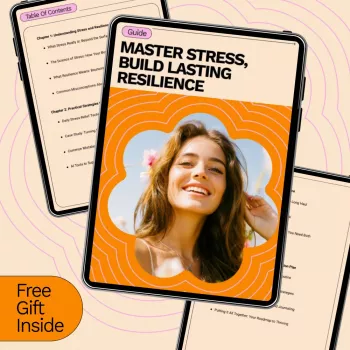
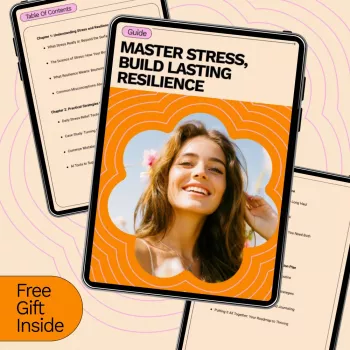
For structured practice (not just tips), a guided system can make habits easier to repeat. Master Stress, Build Lasting Resilience – Practical Guide on How to Manage Stress and Build Resilience for Everyday Life is designed to turn these skills into a routine you can actually keep.
When stress shows up as physical tension, mobility work can help your body “get the message” that it’s safe to downshift. Mastering Mobility & Flexibility for Peak Performance – Athlete & Everyday Movement eBook supports a simple, repeatable movement practice that pairs well with recovery-focused stress routines.
If decision fatigue adds pressure to your day, simplifying choices can help protect bandwidth. Minimal Trends Toolkit for Outfit Planning: 3-in-1 Bundle of Guides, eBooks & Checklists can reduce daily “what now?” moments so your energy goes to what matters.
Evidence-based options like CBT and mindfulness-based approaches can build coping skills, and medical care can rule out underlying conditions. For additional guidance on coping strategies, the National Institute of Mental Health and the CDC provide practical resources.
For a straightforward system you can follow day-to-day, keep Master Stress, Build Lasting Resilience – Practical Guide on How to Manage Stress and Build Resilience for Everyday Life available as a reference when stress spikes and when you’re planning your week.
Try 3–5 physiological sighs (inhale, top-up inhale, long exhale), a slow-exhale breathing pattern, or a quick grounding scan (5-4-3-2-1). The goal is to lower arousal enough to choose one clear next action.
Some relief can happen within minutes, but lasting resilience typically improves over weeks with consistent sleep, movement, boundaries, and flexible thinking skills. Use the 7-day starter plan to begin, then keep the most effective two habits for a 4-week consistency window.
Protect sleep with a consistent wake time, a short wind-down routine, reduced screens and stimulants at night, and a quick “worry dump” on paper before bed. If insomnia is severe or persists, professional support can help identify causes and restore rest.












Leave a comment