The Budget-Friendly Home Decorating Checklist for a Fresh, Pulled-Together Home
A new space doesn’t need a full makeover budget to feel intentional. The fastest way to get that “finished” look is to make a few high-impact decisions in the right order—layout, lighting, color, and only then the finishing touches. A step-by-step checklist keeps each purchase purposeful, helps you plan room-by-room, and makes it easier to skip impulse buys that don’t match your measurements or your style direction.
Start With a Simple Plan: Goals, Timeline, and a “Done” Definition
Before you shop, decide what “better” actually means for each room. A living room might need to support hosting, while a bedroom might need darker sleep conditions and calmer colors. Write one clear goal per room and use it as a filter for every decision.
- Choose a goal per room: sleep better, host friends, create a work zone, make mornings smoother, or reduce clutter.
- Set a realistic timeline: quick wins for week one (declutter, bulb swaps), medium projects for the next month (curtains, storage), and “nice-to-haves” later (new accent chair, gallery wall).
- Pick a style direction with 3–5 references: focus on repeated colors, materials, and shapes instead of copying exact items.
- Measure first: record wall lengths, window widths, ceiling height, and key clearances; note what can’t move (outlets, vents, radiators).
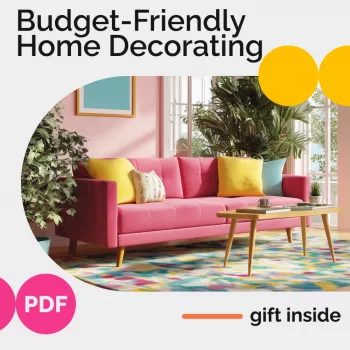
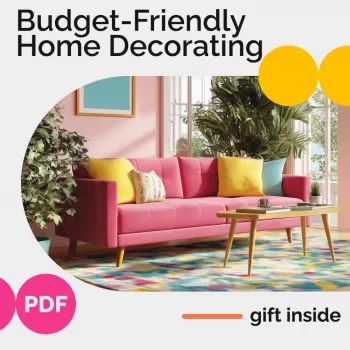
If you want a single place to keep measurements, paint notes, and a shopping short list, use The Budget-Friendly Home Decorating Checklist (Digital Download) to organize decisions before you spend.
Budget Basics That Prevent Overspending
Most decorating budgets get blown on “cute” items bought too early. The fix is simple: separate what the room needs to function from what makes it feel styled.
- Split spending into essentials vs. finishing touches: prioritize function, comfort, and safety before décor.
- Create a replacement list: keep a running list of items that can wait (side tables, art, upgraded rug) and only buy what unlocks daily comfort now.
- Use a one-in, one-out rule: when you bring in a new vase, pillow, or frame, donate or store another to avoid clutter creep.
- Track hidden costs: include command strips, picture hooks, hangers, bulbs, bins, tool bits, delivery fees, and returns.
Example room budget split (adjust to fit your home)
| Room |
Highest-impact priorities |
Suggested split (Essentials / Decor) |
| Living room |
Seating layout, lighting, rug/softness |
70% / 30% |
| Bedroom |
Bedding comfort, blackout needs, bedside lighting |
75% / 25% |
| Kitchen/dining |
Organization, lighting, table function |
80% / 20% |
| Bathroom |
Storage, linens, easy-clean upgrades |
85% / 15% |
| Entryway |
Drop zone, hooks, runner, mirror |
70% / 30% |
Room-by-Room Checklist: What to Do First (The High-Impact Order)
When you decorate in the right sequence, the room looks better at every stage—even if you pause between steps.
- Declutter and deep clean: clear surfaces so you can see what storage is missing and what’s simply “homeless.”
- Layout first: place the largest pieces, confirm walking paths, and create clear routes from doors to main zones.
- Lighting second: add layers—overhead, task, and ambient. Even a basic bulb swap can unify the space quickly. ENERGY STAR has a practical overview of efficient lighting options at ENERGY STAR Lighting.
- Textiles third: curtains, rugs, and throws bring softness and color for less than most furniture swaps.
- Surfaces last: art, mirrors, plants, and styled objects should fill gaps only after function is handled.
Tip: if you’re repainting, consider indoor air quality and ventilation. The EPA’s guidance on indoor pollutants is a helpful reference: U.S. EPA: Indoor Air Quality.
Affordable Decorating Tips That Look Expensive
- Repeat finishes: pick one metal (matte black, brass, or nickel) and repeat it across hardware, frames, and lighting.
- Use “pairs” for polish: two matching lamps, two framed prints, or two baskets reads intentional and balanced.
- Go larger, not more: one oversized art piece or mirror often looks calmer than many small items scattered around.
- Shop smarter: local marketplaces are great for solid-wood basics; update them with hardware, stain, or paint.
- Follow a color rule: 60/30/10 (dominant/secondary/accent) keeps the room cohesive even with budget finds.
When you’re buying textiles, remember that care labels matter—especially for washable slipcovers, curtains, and throw blankets. The FTC explains textile labeling requirements here: FTC: Care Labeling Rule.
DIY Inspiration: Quick Upgrades With Big Visual Payoff
Avoid Common Budget Traps
Use the Digital Checklist to Stay Consistent (and Finish Faster)
Get the printable/downloadable guide here: The Budget-Friendly Home Decorating Checklist | Affordable Decorating Tips & DIY Inspiration | Digital Download. If you also like a structured approach to personal style (useful when you’re trying to keep colors and aesthetics consistent across home and wardrobe), consider Minimal Trends Toolkit for Outfit Planning: 3-in-1 Bundle of Guides, eBooks & Checklists.
FAQ
What’s the first thing to decorate when moving into a new home on a budget?
Start with layout, lighting, and one comfort upgrade that changes daily life (like bedding or seating). Add textiles and art after storage and function are handled so you don’t decorate over clutter.
How can a room look cohesive without buying matching furniture?
Repeat two to three core colors and one metal finish, then mix textures like wood, linen, and ceramic. Use pairs (lamps, frames, baskets) to create balance without looking “matchy.”
Is a decorating checklist helpful if the home is still unfinished or temporary?
Yes—focus on portable upgrades like lighting, curtains, rugs, and organization. A checklist keeps temporary choices coordinated so the space still feels intentional while you wait to invest in bigger changes.
Recommended for you












Leave a comment